- 0
- 461 words
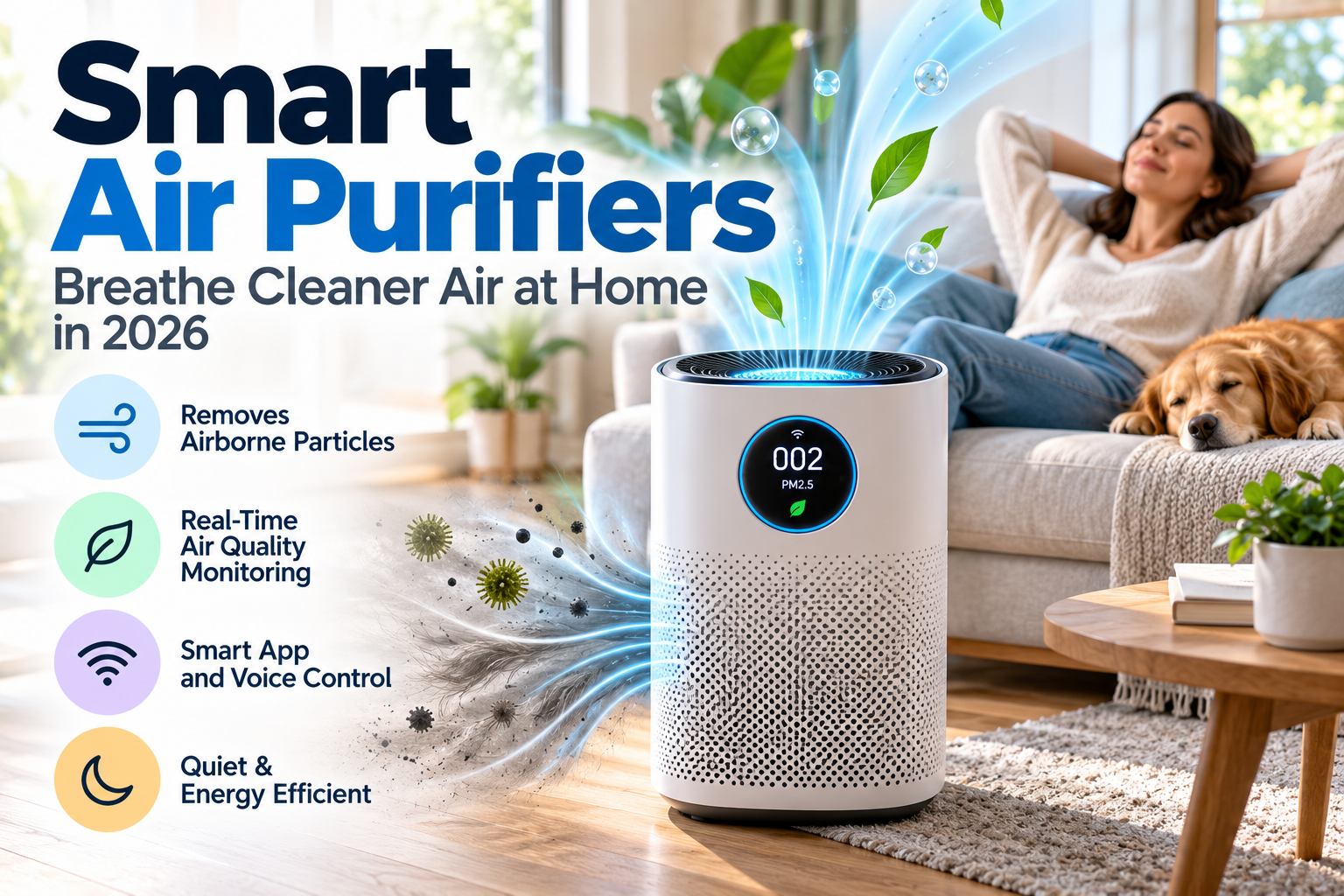
Indoor air quality plays an important role in creating a comfortable and healthy home environment. Dust, pollen, pet dander, and other airborne particles can accumulate indoors, potentially affecting comfort and respiratory health.
Fortunately, modern technology offers a convenient solution: smart air purifiers.
In 2026, these innovative devices combine advanced air filtration with intelligent sensors, smartphone connectivity, and automated controls to help homeowners manage indoor air quality more easily.
But how do smart air purifiers work, and are they worth buying?
What Is a Smart Air Purifier?
A smart air purifier is an electronic device designed to remove airborne particles and certain pollutants from indoor air.
Unlike traditional air purifiers, smart models feature connected technology that allows users to monitor air quality and control their devices through smartphone applications.
Many models include built-in sensors that detect airborne particles and automatically adjust fan speeds when pollution levels change.
5 Benefits of Smart Air Purifiers
1. Helps Remove Airborne Particles
Many smart air purifiers use HEPA filters designed to capture tiny airborne particles, including dust, pollen, and pet dander.
This can be particularly helpful for households dealing with allergies or seasonal pollen.
2. Real-Time Air Quality Monitoring
Smart air purifiers often include sensors that measure particulate matter levels.
Users can view air quality information through digital displays or smartphone applications, helping them understand changes in their indoor environment.
3. Automatic Air Cleaning
One of the most convenient features is automatic operation.
When sensors detect increased particle concentrations, compatible devices can automatically increase filtration speed.
This eliminates the need for frequent manual adjustments.
4. Smartphone and Voice Control
Many smart air purifiers connect to Wi-Fi networks and support smartphone applications.
Some models also integrate with Amazon Alexa or Google Home, allowing convenient voice commands and automated schedules.
You can adjust settings, check filter status, or schedule operation remotely.
5. Quiet and Energy-Efficient Operation
Modern air purifiers often feature sleep modes, adjustable fan speeds, and energy-saving functions.
These settings can make them suitable for bedrooms, living rooms, and home offices.
What to Consider Before Buying
Before purchasing a smart air purifier, consider these important factors:
- Room Size: Choose a model rated for your room.
- HEPA Filtration: Look for effective particle filtration.
- CADR Rating: Higher Clean Air Delivery Rates indicate faster particle removal.
- Noise Level: Check operating noise, especially for bedrooms.
- Filter Costs: Consider replacement frequency and ongoing expenses.
Remember that air purifiers cannot eliminate every indoor pollutant or replace proper ventilation.
Final Thoughts
Smart air purifiers offer a practical combination of air filtration, convenient controls, and intelligent automation.
Whether you’re concerned about dust, pollen, pet dander, or everyday indoor air quality, the right device can be a useful addition to your home.
Thinking about upgrading your home in 2026? A smart air purifier could help you create a cleaner, more comfortable indoor environment.
Author

realapid@gmail.com
Related Posts
3 Must-Have Smart Kitchen Devices for Your Home in 2026
- 0
- 467 words
Technology is transforming the way we cook, prepare meals, and manage our kitchens. In 2026, smart kitchen devices are making everyday cooking...
Read out all
How to Choose the Best Robot Vacuum for Your Home
- 0
- 394 words
Choosing the right robot vacuum comes down to matching its hardware and features to your home’s specific layout, flooring, and maintenance preferences....
Read out all
Top Smart Displays of 2026: The Ultimate Smart Home Centers
- 0
- 396 words
Smart displays have evolved far beyond basic bedside alarm clocks with screens. Today’s top models serve as conversational AI companions, vibrant entertainment...
Read out all
Smart Locks for Homes: The Future of Home Security in 2026
- 0
- 475 words
Imagine arriving home with your hands full of groceries and unlocking your front door without searching for your keys. Thanks to smart...
Read out all
Top Outdoor Security Cameras of 2026: Protect Your Home in High Definition
- 0
- 379 words
Upgrading your home security no longer requires expensive professionally installed systems or messy wiring across your yard. Today’s outdoor security cameras deliver...
Read out all