- 0
- 473 words
Living with pain can affect your daily activities, sleep quality, and overall well-being. Fortunately, advances in healthcare technology have introduced innovative devices designed to help people manage discomfort without relying entirely on medication.
From electrical stimulation devices to wearable therapy gadgets, pain management devices are becoming increasingly popular for people seeking convenient ways to manage pain.
But what exactly are these devices, and how do they work?
What Are Pain Management Devices?
Pain management devices are medical or wellness technologies designed to help reduce, control, or relieve different types of pain.
Some devices use electrical stimulation, while others rely on heat, cold, vibration, or other therapeutic methods.
Depending on the technology, they may help with muscle soreness, joint discomfort, or certain chronic pain conditions.
3 Popular Types of Pain Management Devices
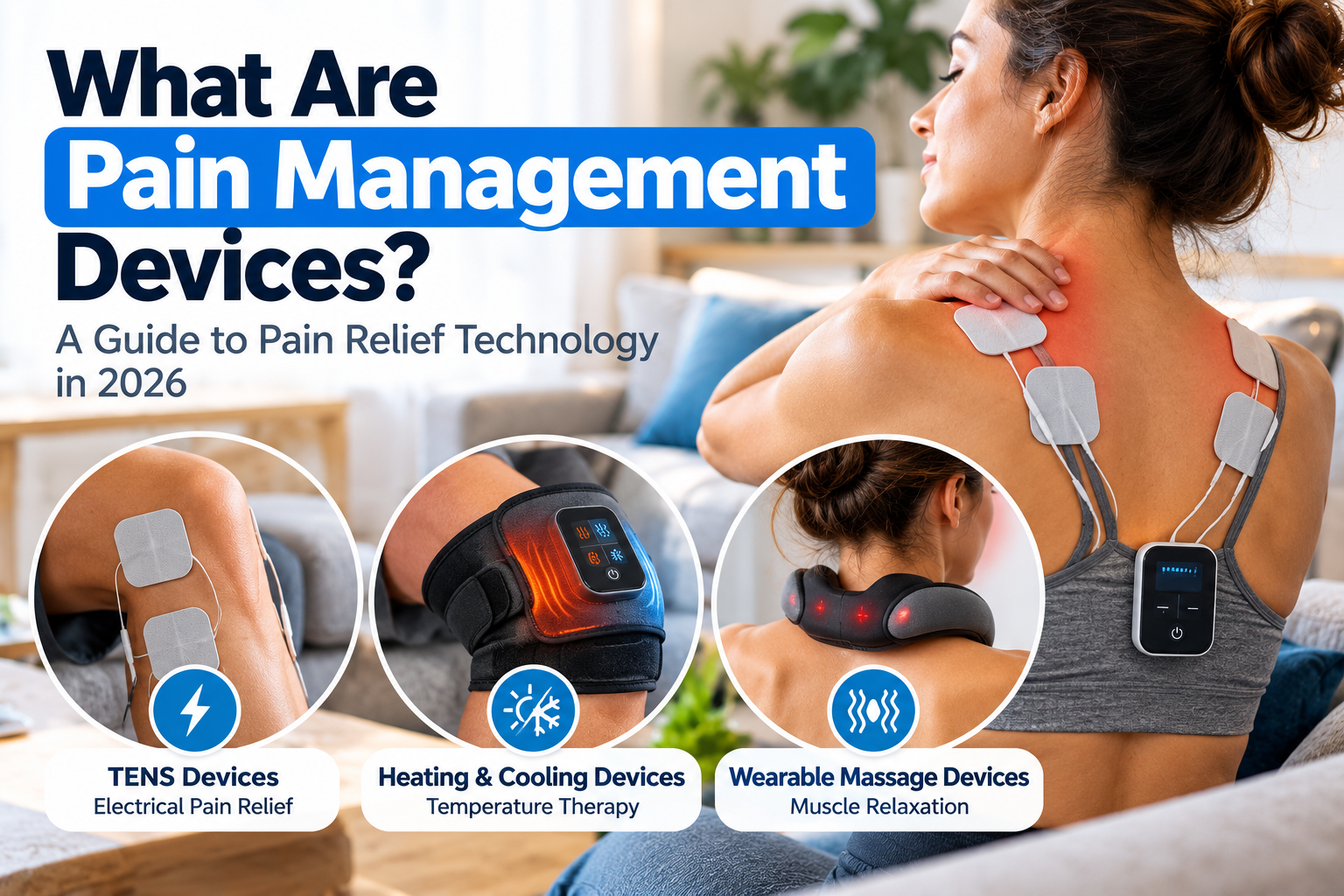
1. TENS Devices – Electrical Pain Relief
Transcutaneous Electrical Nerve Stimulation (TENS) devices use low-voltage electrical impulses delivered through electrodes placed on the skin.
These impulses may help modify pain signals and provide temporary relief for some users.
Potential Benefits:
- Drug-free pain management option.
- Compact and portable designs.
- Adjustable stimulation settings.
- May provide temporary relief for certain pain conditions.
TENS is not suitable for everyone, including some people with implanted electronic medical devices.
2. Smart Heating and Cooling Devices
Heat and cold therapies have been used for years to manage discomfort.
Modern wearable devices make these methods more convenient through adjustable temperatures, rechargeable batteries, and automatic shutoff features.
Heat therapy may help relax tight muscles, while cold therapy can temporarily reduce pain and swelling after certain injuries.
Potential Benefits:
- Convenient treatment at home.
- Adjustable temperature controls.
- Useful for some muscle and joint discomfort.
- Portable options for everyday use.
3. Wearable Massage Devices
Wearable massage devices use vibration or mechanical pressure to help relax muscles and temporarily ease tension.
Some models feature multiple intensity settings, rechargeable batteries, and targeted applications for areas such as the neck, shoulders, or back.
Potential Benefits:
- Convenient muscle relaxation.
- Easy-to-use controls.
- Portable designs.
- May temporarily reduce muscle tension.
Are Pain Management Devices Safe?
Many devices can be used safely when appropriate for the individual and operated according to manufacturer instructions.
However, effectiveness varies by device and medical condition. Some products have limited scientific evidence supporting their advertised benefits.
People with persistent pain, pregnancy, implanted medical devices, circulation problems, or reduced skin sensation should consult a healthcare professional before using certain technologies.
Final Thoughts
Pain management technology continues to offer new ways to address everyday discomfort.
Whether you’re considering a TENS device, a temperature-controlled therapy gadget, or a wearable massager, choosing the right product depends on your individual needs.
In 2026, the best pain management device isn’t necessarily the most advanced—it’s one that is safe, appropriate, and supported by reliable evidence.
Remember that these devices can complement professional care but should not replace a medical evaluation for persistent or unexplained pain.
Author

realapid@gmail.com
Related Posts
High-Tech Glow: The Best At-Home Skin Care Devices Worth the Hype
- 0
- 367 words
At-home skincare technology has transformed daily beauty routines, bringing clinical-grade treatments straight to your bathroom counter. From smoothing fine lines to clearing...
Read out allHow to Track Your Health Vital Signs: A Modern At-Home Guide
- 0
- 393 words
Monitoring your vital signs at home gives you a clear window into your baseline health, helping you detect subtle changes early and...
Read out all
5 Healthcare Devices for Stress Relief You Should Know About in 2026
- 0
- 490 words
Stress has become a common part of modern life. Between work, family responsibilities, and everyday challenges, finding time to relax can sometimes...
Read out all
5 Anti-Aging Healthcare Devices Worth Exploring in 2026
- 0
- 456 words
Aging is a natural part of life, but modern technology is changing how we approach skincare, wellness, and healthy aging. In 2026,...
Read out all
Sleep Better in 2026 with a Tongue Stabilizing Device
- 0
- 439 words
Getting a good night’s sleep is essential for your health, energy, and overall well-being. However, snoring can make peaceful nights difficult for...
Read out all